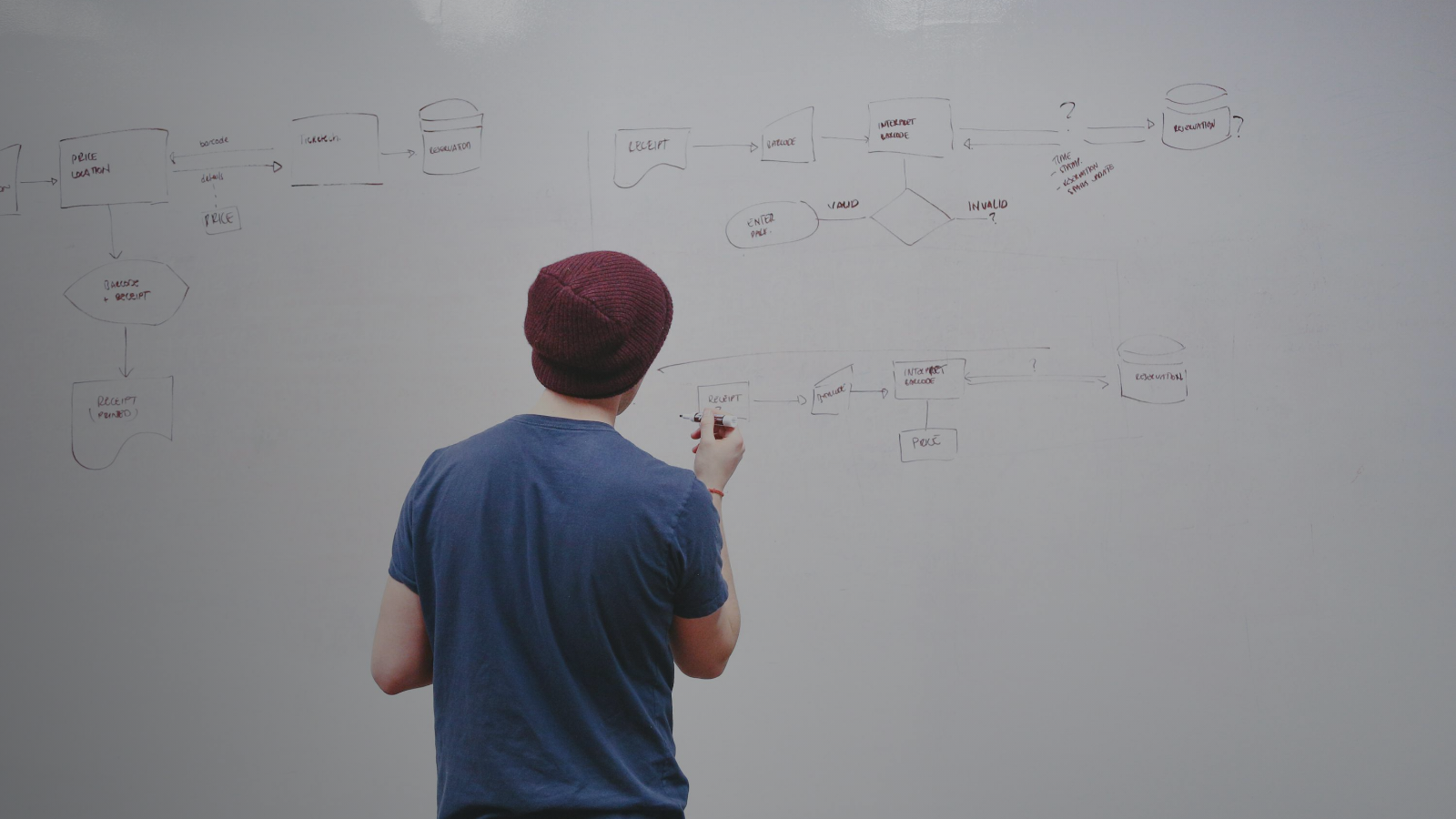
The manager writes the prompt. They remember the context the prompt forgot. They check whether the answer is true. They hand the result to the next person. When a test fails, they explain the problem again. When work pauses, they reconstruct what happened from chat threads and browser tabs.
Meanwhile, the manager is the only place where the whole story still exists.
Loop engineering offers a better operating model. Instead of asking an agent for one answer, you design a bounded system that keeps acting, observing, and correcting until it reaches a verifiable outcome or a defined stop. IBM describes the basic cycle as goal, action, observation, and adjustment. Its wider guidance also highlights the surrounding machinery: context, tools, isolated workspaces, specialist agents, stopping conditions, and persistent state. That framing is useful because it moves the conversation from clever prompts to managed delivery systems.
That is already how the dev-pack behaves. After a failed check, it does not congratulate itself and move on. The work stays in the record, the right slice goes back for repair, and a person is waiting at the consequential gate.
A prompt produces an answer while a loop produces a controlled outcome
A tidy answer today does not solve Tuesday. The operations lead still rebuilds context, checks who has access, and finds out that the approval button broke.
Which workflow still depends on a manager holding the whole story together?
Free online consultation. Then you get a clear first milestone, acceptance criteria, and a breakdown of fixed‑price Statements of Work (SoWs).
| Management concern | One-off prompting | Governed delivery loop |
|---|---|---|
| Success | Described in a request | Defined as a verifiable goal with acceptance criteria |
| Context | Reassembled by a person | Loaded from approved SOPs, skills, and project state |
| Execution | One general interaction | Bounded work routed to the right specialist capability |
| Quality | Judged from the answer | Observed through tests, validators, review, and runtime evidence |
| Failure | Starts another manual conversation | Routes back to remediation with evidence attached |
| Continuity | Lives in chat history and memory | Persists in state, ledgers, artifacts, repositories, and work management |
| Control | Depends on the operator noticing risk | Uses explicit permissions, boundaries, stop rules, and approval gates |
| Accountability | Can become ambiguous | Keeps consequential decisions with named human owners |
That distinction matters for any workflow where “almost right” can be expensive. Software delivery, regulated operations, financial processes, customer communications, and executive reporting all need more than fluent output. They need a system that can prove what happened and knows when not to proceed.
The Via Logos loop starts with a contract for success
Every useful loop begins with a trigger: an approved brief, a work item, a task, or a change in workflow state. But the trigger is only the starting bell.
Before execution, the work is translated into a verifiable goal. Acceptance criteria define what must be true. Boundaries define what the system may touch. Stopping conditions say when the loop is complete, when it should pause, and when a person must decide.
Here is the difference. “Make approvals faster” sounds useful in a meeting and is useless to a loop. Give it something harder edged: remove the email handoff between operations and finance, but do not let anyone except the operations director release the result.
The point is not to remove ambiguity from every business decision. It is to stop ambiguity from leaking into execution unnoticed.
The orchestrator turns policy into movement
Open an issue run and the first inputs are mundane: the issue record, project rules, and the SOP named for that job. Research can go left, verification right; neither worker gets to invent policy along the way.
This is not several agents in a room hoping collaboration appears. Each specialist gets a defined slice.
If two changes could collide, they go into isolated workspaces. Tool access is similarly narrow: the files, repository, browser, test runner, or business system required for that slice, not a set of master keys. The orchestrator keeps the sequence and the handoffs.
The architecture resembles a well-run operating theatre more than a noisy group chat. Specialists act within a clear field. Instruments are prepared for a purpose. The record follows the work. Critical transitions are called out. Authority is visible.
The Via Logos operating model describes this as a governed layer connecting people, permissions, context, orchestration, memory, tools, guardrails, skills, and the systems a business already uses. Loop engineering is how that layer moves from architecture to repeated action.
Evidence is the hinge of the loop
The defining moment comes after action.
A brittle automation sees a completed step and marches on. Via Logos looks at the evidence: did the change work in the browser, pass the test, reconcile the record, or satisfy the policy? No proof, no progression.
For software, that evidence may include tests, static analysis, code review, browser behavior, logs, or deployment checks. For marketing, it may include source verification, brand review, media inspection, naturalness checks, client-safety validation, and an approved publish package. In an operational workflow, it might be a reconciliation, a policy rule, an authorization, or a measured service-level result.
If the evidence fails, the work does not disappear behind a confident summary. The failure becomes new input. The loop returns to remediation, changes its approach, and checks again. If the evidence passes, the system advances in a controlled way.
OpenAI’s explanation of the Codex agent loop shows the underlying feedback mechanic clearly: tool output is appended to working context and influences the next action, with the loop continuing until a final response is produced.
Anthropic’s analysis of Claude Code use shows why the management boundary matters: people retain most planning decisions while the agent handles most execution decisions. Its property-testing agent makes the feedback path concrete. It proposes tests, runs them, reflects on whether the result is meaningful, and leaves candidate-bug validation to human review.

The feedback path is the feature: failed evidence changes the next action, while persistent state keeps the work recoverable.
Two loops show the pattern in practice
Issue Autopilot begins with an issue and carries it through structured stages such as triage, resolution, testing, review, remediation, and controlled merge or release. It retains state and a ledger so the process can resume after interruption. A failed test or review is not treated as a ceremonial warning. It routes the work back to the stage that can repair it, then asks for new evidence.
The marketing loop carries different stakes but uses the same discipline. A management brief creates a durable campaign record. The blog pins down the claims before channel specialists adapt them. Artwork, source checks, brand review, and client-safety tests can send weak material back for another pass. Only then does the workflow prepare publication files and update the work record.
These examples do not mean every Via Logos SOP uses identical mechanics. They show that the loop pattern recurs across multi-agent workflow families, with gates and evidence adapted to the risk of the work.
Automation can prepare, verify, and recommend. Consequential authority remains human.
Persistent state turns activity into operating memory
That memory has to live somewhere other than the tab. Otherwise, Tuesday’s run repeats Monday’s mistakes and sends the same questions back to the same manager.
Via Logos preserves continuity through run state, append-only ledgers, artifacts, repository history, and ViaRah as a work-management and reporting layer. Together, these records answer practical management questions:
- What outcome are we pursuing?
- What has already been attempted?
- What evidence passed or failed?
- What changed after a failure?
- Who owns the next decision?
- Can the work resume safely after an interruption?
A status report can then say more than “busy.” It can show the current stage, the evidence already seen, the decision that remains, and the condition holding the line.
Human control belongs at consequential transitions
Good loop engineering does not mean removing people from the system. It means spending human attention where judgment, authorization, and accountability matter most.
Via Logos retains approval boundaries for decisions such as scope, policy, merge, release, deployment, and publication. A loop may gather evidence and prepare a recommendation, but it does not silently acquire authority because it completed many steps.
This is consistent with IBM’s warning that people remain responsible for quality, security, and business outcomes. Human oversight is not a decorative final click. It is a designed control with enough evidence for a responsible person to decide.
The result is a healthier division of labor. The system carries repetition, coordination, retrieval, and verification. People carry intent, tradeoffs, exceptions, and consequence.
Boundaries make sustained speed affordable
Picture a third retry. The test environment stays occupied and the reviewer cannot pick up the next change.
Perhaps that is still cheaper than a bad release. Perhaps not. The stop rule forces the tradeoff into the open before the bill arrives.
That is why Via Logos treats boundaries and stopping conditions as part of the success contract. The loop should know the maximum useful number of attempts, which systems are in scope, what permissions are allowed, which failures require escalation, and when further automation costs more than a human decision.
Management should also separate activity measures from outcome measures. Tool calls, generated files, or completed subtasks show motion. They do not prove value. A useful loop connects its evidence gate to the business condition that matters, such as a verified release candidate, a reconciled transaction, a policy-compliant package, or a publishable campaign asset.
This makes pilots easier to judge. The question is not whether an agent worked for hours without help. The question is whether the loop reached a defined outcome inside agreed boundaries, preserved an audit trail, and brought exceptions to the right person. A slower loop that does those things may be more valuable than a faster system that leaves management cleaning up hidden uncertainty.
Start with one workflow that is already asking for a loop
Start with the workflow everyone complains about on Monday morning: the approval queue that needs three reminders, the report rebuilt from six tabs, or the release checklist that lives in one person’s memory.
Use this checklist to find a credible 30-day slice:
- The workflow has a clear trigger and a named owner.
- The desired outcome can be observed, not merely described.
- The current process contains repeated handoffs, checking, or context rebuilding.
- The systems and data involved can be named.
- Permissions can be narrowed to the minimum useful access.
- At least one evidence gate can distinguish progress from plausible-looking failure.
- A failed gate has a safe remediation path.
- Stopping conditions and cost boundaries can be stated before execution.
- Consequential approval points can remain with accountable people.
- The first slice is small enough to inspect end to end.
If those conditions are present, management can map the workflow as a loop before buying more tools or scaling more prompts. Define the trigger, measurable outcome, evidence, approval points, system connections, and operating boundaries. Then decide whether the economics and risk profile justify a pilot.
The payoff is prosaic, and that is why it matters. A manager can step away for lunch without becoming the missing integration layer. People return to the decisions that deserve them.
If that Monday workflow came to mind, talk with Via Logos. We will turn it into a written delivery plan, a scoped Statement of Work, and a plain-language estimate before anything gets built. You can also send its trigger and approval owner to team@vialogos.org.
Sources
- IBM: What is loop engineering?
- OpenAI: Unrolling the Codex agent loop
- Anthropic: Agentic coding and persistent returns to expertise
- Anthropic: Finding bugs across the Python ecosystem with Claude and property-based testing
- Via Logos: How human-in-the-loop agentic workflows change delivery speed and governance